RMI Strategy 2030: Driving responsible and sustainable mica supply chains

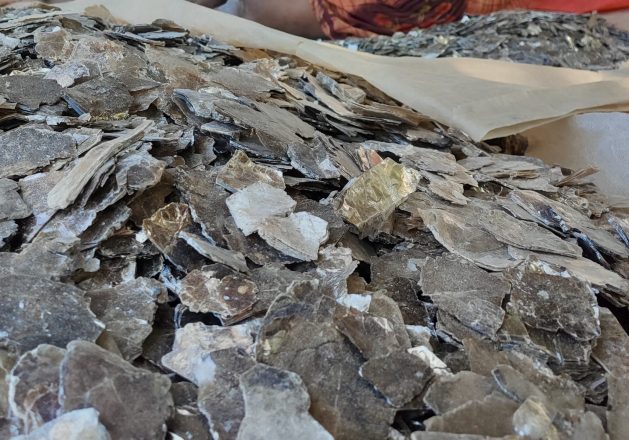
Pile of mica on a tarp at a sorting site in Madagascar

The Responsible Mica Initiative’s Strategy 2030 builds on its proven three-pillar approach to ensure that mica value chains are fair, responsible, and sustainable. By combining industry collaboration, legal frameworks, and community empowerment, RMI aims to eradicate child labor, improve working conditions, and support living incomes and wages across mica-producing regions. 

Our three-pillar approach for 2030 

RMI’s 2030 strategy is anchored in three mutually reinforcing pillars that address the mica supply chain holistically:

Pillar 1: Promoting Transparency 
& Responsible Workplace Practices

2030 Target: RMI members achieve full traceability across their upstream value chains and ensure compliance with Responsible Workplace Standards at processing and mining sites. 

Success outcomes and KPIs include, but are not limited to: 

  • Percentage of members completing their traceability campaigns


  • Percentage of members having traced trees up to processing sites and mining sites 


  • Member satisfaction with our traceability platform 
  • Clear support and audit processes developed and implemented for processing sites (members and non-members)


  • Quality assurance processes developed and periodically reviewed 


  • Number of RMI on-site assessments, audits and re-audits conducted 


  • Number of corrective action plans managed 


  • Compliance level of member-processors against Workplace Standard 
  • Mining standards defined and rolled out 


  • Support and audit processes developed for mines and artisanal & smallscale mining (ASM) groups (members and non-members) 


  • Quality assurance process developed and periodically reviewed  


  • 
Number of RMI on-site assessments, audits, and re-audits conducted


  • Number of corrective action plans managed 


  • Compliance level of mines or mining groups against Workplace Standard for mines or Mica CRAFT Code 
  • Training materials for processing sites, mines, ASM groups, and auditors developed


  • Number of processing sites’ management, workers, and internal auditors trained 


  • Number of mines and formalized artisanal and small-scaled mining groups (ASM) mining groups trained 


  • Number of auditors trained for processing sites, mines, and ASM audits


  • Number of processing sites and downstream members engaged with and supporting ASM mines 

Pillar 2 Fostering governance and an enabling legal environment

2030 Target: Workers in members’ upstream value chains benefit from clear, enforced legal frameworks. 

Success outcomes and KPIs include, but are not limited to: 

In countries where RMI is engaged: 


  • Number of governments recognizing and supporting dissemination of the Global Workplace Standard for mica processors


  • Number of governments supporting RMI’s mica mining standard and CRAFT Code for ASMs 
  • Number of mining groups formalized with adequate management systems 


  • Number of mining groups holding formal licenses to operate, when applicable 

Pillar 3 Empowering Workers & Communities 

2030 Target: Workers and mining communities in members’ upstream value chains improve their quality of life, meet basic needs, and eliminate child labor. 

Success outcomes and KPIs include, but are not limited to: 

  • Number of children beneficiaries supported (education, health, nutrition…)


  • Number of children newly enrolled in school or educational facilities


  • Percentage of schools’ or educational facilities’ regular attendance in those villages where RMI is working 


  • Number of scholarships provided 
  • Number of workers in processing sites part of members’ upstream value chains receiving at least a living wage. 


  • Number of mining groups/mines part of members’ upstream value chains receiving at least a living income or wage


  • Number of information sessions conducted on living wages / incomes 
  • Number of villages/communities and direct beneficiaries supported, by country 


  • Percentage of villages where children literacy & numeracy skills have improved. 


  • Number of households with improved access to safe drinking water facilities  


  • Percentage of households reporting they can access healthier diet after program


  • Percentage of households reporting a reduction in expenditure 


  • Number of mining groups or miners trained against use of PPE, basic first aid gestures, mica weighing …