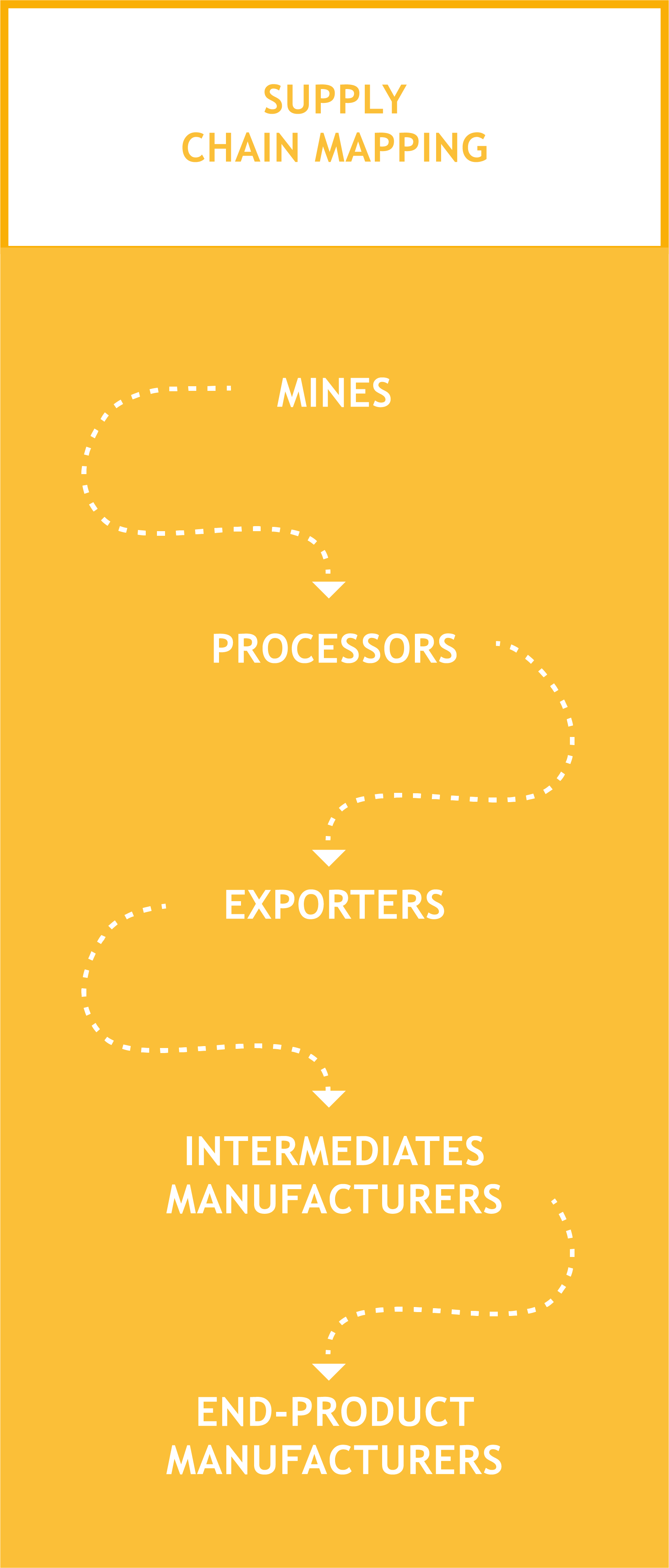
RMI members adhere to the principle of supply chain transparency. They agree to support upstream members of their supply chain, including mines and processors, to adopt workplace standards.
To identify the mines and processors, members agree to map their supply chains. Members range from global manufacturers of end-products, such as electronics and cosmetics that use mica and manufacturers of intermediates, such as pigments, paints and coatings, to mica exporters, processors and mine operators in India.
At the inception of the mapping protocol program in 2018, RMI members represented 30 percent of India’s mica exports by volume and 37 percent of exports by volume originating from the states of Bihar and Jharkhand.
The scope of the initial mapping exercise ensured that the program would be relevant to the jurisdictions in India that presented the greatest challenges to developing a responsible supply chain free of child labor. In 2019, member volumes represented 57 percent of India’s mica exports by volume and 70 percent of exports by volume originating from the states if Bihar and Jharkhand. Members agree to repeat the supply chain mapping protocol annually to keep program data and scope relevant.
RMI members
collectively
represent | 57% | of mica exports
from Bihar and
Jahrkhand |