2017–2018: Founding and first steps
- RMI officially launched in January 2017 with 20 founding members, later growing to 47 by the end of 2018.
- Created Action Groups and established the Board of Directors to guide strategy and governance.
- Developed the first Responsible Workplace Standards for mica mines and processors.
Began Community Empowerment Programs (CEP) in 40 villages across Bihar and Jharkhand.
- Recognized by the UN Forum on Business & Human Rights as the most innovative approach to put the UN Guiding Principles in practice.
- Following the work of the RMI, mica was added to the US Department of Labor’s list of goods produced by child labor.
2019–2020: Scaling up and strengthening standards
- Expanded Community Empowerment Programs to 80 villages, benefiting nearly 6,000 households.
- Introduced Compliance and Corrective Action Tools to help processors align with workplace standards.
- Signed a Memorandum of Understanding with the Responsible Minerals Initiative to develop a joint Global Mica Workplace and Due Diligence Standard for Mica Processors, building on the Responsible Mica Initiative’s existing one.
- Adapted to the COVID-19 pandemic by supporting workers, maintaining education for children, and setting up community kitchens.
- Submitted a Sustainable Mica Policy Framework to the Government of Jharkhand.
Expanded to 66 members
2021: Consolidating knowledge and driving innovation
- Completed third-party impact assessments of CEP programs.
- Launched a blockchain-based traceability platform to enhance traceability and transparency.
-
Conducted a living wage study for mica workers in India with the Fair Wage Network.
- Joined the Global Battery Alliance to integrate mica into responsible sourcing conversations within the automotive sector.
- Co-organized under EU Parliament a dedicated session on Child Labor with a specific mica focus, leading to the release of a mica-related Urgent Motion by EU Commission.
2022–2023: Global reach and digital transformation
- Deployed the traceability platform to support members’ deep dive in their supply chains and regulatory compliance
- Strengthened government engagement in Jharkhand, India, contributing to progress toward a fair legal framework.
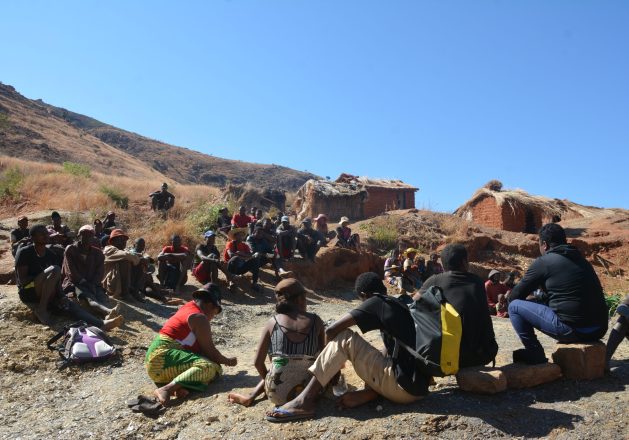
- Opened office in Madagascar, and launched implementation of responsible workplace standards, building on experience in India.
- Supported processors through audits and training in India.
- Expanded impact to 180 villages in India through community programs focused on education, health, and livelihoods.
2024 and beyond: Deepening impact and expanding globally
- Launched the Mica CRAFT Code, a new global standard for responsible artisanal and small-scale mining (ASM).
- Continued to strengthen livelihoods, health, education, and social security in India through holistic three-year community program cycles. Initiated Community Empowerment Programs in Madagascar
- Advanced responsible sourcing and formalization efforts in Madagascar, with special focus on living wages, workplace standards, and governance.
-
Strengthened the Global Workplace and Due Diligence Standard for Processors to align with evolving ESG and due diligence frameworks worldwide.
- Received grants from the European Union for its programs in India, and from the UNDP in Madagascar.
- Deepened member engagement across the supply chain to ensure accountability, collaboration, and measurable impact, reaching 110 members end of 2025.