
The Responsible Mica Initiative aims to foster fair, responsible and sustainable mica supply chains that are free from child labor and built on respect for human rights.

Recognizing the need for broad societal engagement, RMI works on bringing together all relevant stakeholders – companies, governments, civil society organizations, and local communities – to drive lasting change in mica-producing regions.
Our work focuses on addressing the root social and economic causes of child labor and poor working conditions in key mica-extracting regions.
RMI aligns with and supports global efforts to strengthen responsible sourcing, due diligence, and corporate accountability across supply chains.
NB: RMI is not a certification body. Membership should never be represented as an endorsement of good practices but as a commitment to collective action and improvement toward a responsible mica supply chain.
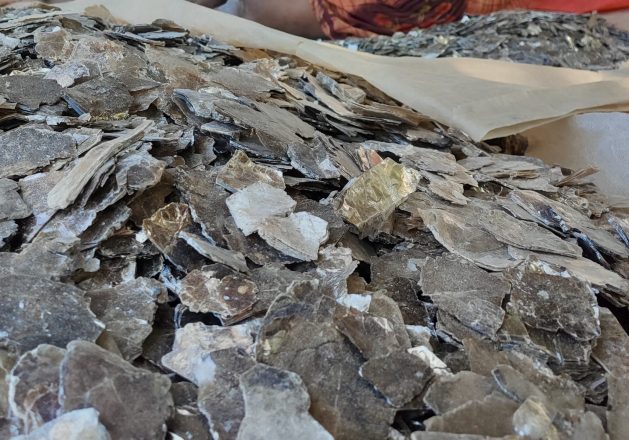
In mica-extraction regions, families often depend on mica collection as their main source of income. With limited access to education, childcare, or alternative livelihoods, parents may bring their children to mining sites, where they end up helping with mica extraction.
India and Madagascar together account for nearly half of global mica exports, yet their mica communities often face poverty, unsafe working conditions, and poor regulation enforcement. Despite national laws prohibiting child labor, economic hardship and informal mining perpetuate exploitative practices. Without strong governance and traceability mechanisms, illegally mined mica can easily enter global supply chains, making responsible sourcing both urgent and complex.
In 2016, industry stakeholders, NGOs, and government representatives gathered at the Delhi Mica Summit and agreed that only collaboration could address the deep-rooted issues in the mica sector and lead to systemic change.
This shared commitment led to the creation of the Responsible Mica Initiative in January 2017. Many founding members had already been working individually to eliminate child labor, but they recognized that a collective, holistic approach was needed to achieve scalable and long-term impact.
RMI is not a buyers’ group: members collaborate to improve conditions, not to negotiate trade terms nor to discuss individual members sensitive information. Our governance structure ensures that all stakeholder voices are represented (1 member – 1 voice) and that decisions reflect a shared vision for responsible mica sourcing.
RMI’s governance includes: