

IMPACT / INDIA
In India, mica is primarily sourced from Jharkhand and Bihar, with additional production in Andhra Pradesh, Maharashtra, and Rajasthan. These regions face high risks of labor abuses and child labor, particularly in artisanal and small-scale mining operations. Communities in these areas often struggle with poverty, limited education, and insufficient access to basic services, creating conditions that perpetuate unsafe and exploitative working environments.
A significant challenge is the complex and poorly enforced legal framework governing mica mining. Historical laws, such as the Forest Conservation Act of 1980 and outdated regional mica regulations, have contributed to a proliferation of unregulated mines. This legal ambiguity allows some operators to bypass oversight, leading to poor working conditions, child labor, and limited enforcement of labor protections. Addressing these gaps is central to RMI’s mission to formalize mines, recognize mica dependent communities, improve compliance with Responsible Workplace Standards, and ensure child labor is eradicated from the mica supply chain in Jharkhand and Bihar.
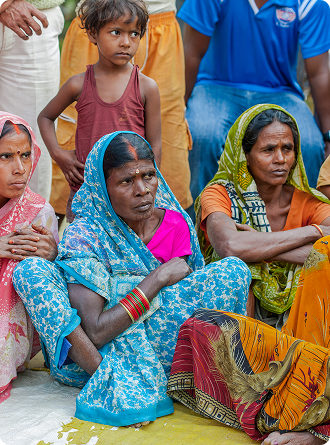
A significant challenge is the complex and poorly enforced legal framework governing mica mining. Historical laws, such as the Forest Conservation Act of 1980 and outdated regional mica regulations, have contributed to a proliferation of unregulated mines. This legal ambiguity allows some operators to bypass oversight, leading to poor working conditions, child labor, and limited enforcement of labor protections. Addressing these gaps is central to RMI’s mission to formalize mines, recognize mica dependent communities, improve compliance with Responsible Workplace Standards, and ensure child labor is eradicated from the mica supply chain in Jharkhand and Bihar.
Over the course of 9 years, as of October 2025, RMI supported:
children enrolled across 18 Balwadi centers
participants engaged in 44 capacity building sessions of School Management Committees (SMCs)
stakeholders (teachers, parents, government officials) participated in 9 district- and block-level meetings to promote quality education
children reached through the formation of 50 Bal Manch child participation platforms
households supported through kitchen garden training and seed kit distribution
adolescent girls and women participated in 44 menstrual hygiene awareness sessions
individuals benefited from 12 village cluster–level health camps and 2 eyes checkup camps in partnership with the Essilor Luxottica Foundation and SESA Palamu
beneficiaries completed advanced training in agriculture and livestock management through 19 sessions of training
individuals received financial literacy training, covered through 50 sessions
vulnerable households reached through 25 awareness and linkage camps on social security and livelihood schemes

India remains the world’s most important source of mica, supplying a wide range of industries from electronics and automotive to cosmetics and paints. The reality of mica extraction and trade in India is however complex and opaque. Global companies across all sectors are under increased scrutiny to demonstrate that their raw materials are responsibly sourced, yet they struggle to reach transparency to the mines, the very first mile of the supply chain.
India remains the world's most important source of mica, supplying a wide range of industries from electronics and automotive to cosmetics and paints. The reality of mica extraction and trade in India is however complex and opaque. Global companies across all sectors are under increased scrutiny to demonstrate that their raw materials are responsibly sourced, yet they struggle to reach transparency to the mines, the very first mile of the supply chain.
In Jharkhand, where the majority of India's mica comes from, mica is both economically vital and socially fragile. Mica processors have now long struggled with local state restrictions preventing them from securing steady sources of mica. Based on our most recent baseline study (more than 1800 respondents), almost 45% of pickers solely rely on mica for their income. However, their earnings are precarious – around 70% below a living income – and are mostly tied to informal and unregulated mining and trading structures. This creates fertile ground for unsafe working conditions, opacity in sourcing, and heightened risks to vulnerable groups, including women and children.
Despite the persisting challenges, our efforts have remained determined. These include continuously mapping supply chains, building the capacity of industry actors to meet adequate ESG standards, engaging government and industry to formalize operations, and promoting alternative livelihoods and access to qualitative education by supporting mica picking communities through local civil society organizations.
Looking ahead, RMI's vision for the India mica sector is one where communities are not merely suppliers of a raw material but recognized partners in a responsible, traceable, and value-adding chain. The opportunity now is to transform a historically opaque and high-risk supply chain into one that protects people and the environment and meets the expectations of local and global industries.
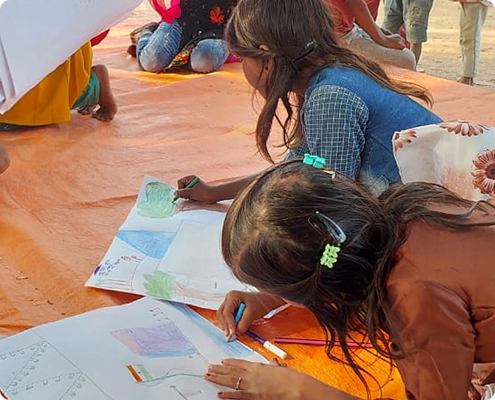
The Community Empowerment program is directed by RMI staff and implemented with the support of more than 90 development professionals employed by local civil society organizations (CSOs).
The Community Empowerment program is directed by RMI staff and implemented with the support of more than 90 development professionals employed by local civil society organizations (CSOs). Partners provide expertise in areas that promote social and economic development in underserved rural communities. RMI and program partners amplify their community outreach by identifying and coaching key community members of each village selected for interventions who are trusted and can serve as ambassadors to replicate and spread knowledge and skills on programmatic areas to the broader population.
Our lead CSO and NGO partners collaborate in a consortium to optimize their effectiveness on the ground and optimize use of budgets:
RMI also utilizes subject matter experts to support strategy development and implementation for a number of programs such our supply chain traceability platform, fair and living wages initiative, workplace standards, and communications.